Root canal treatment cleans out the tooth nerve (pulp) when it has become inflamed through decay or injury, and fills the canals so they are sealed. It is done under local anaesthetic and is often finished in 1-2 sessions. The aim is to keep the tooth in your mouth rather than extract it.
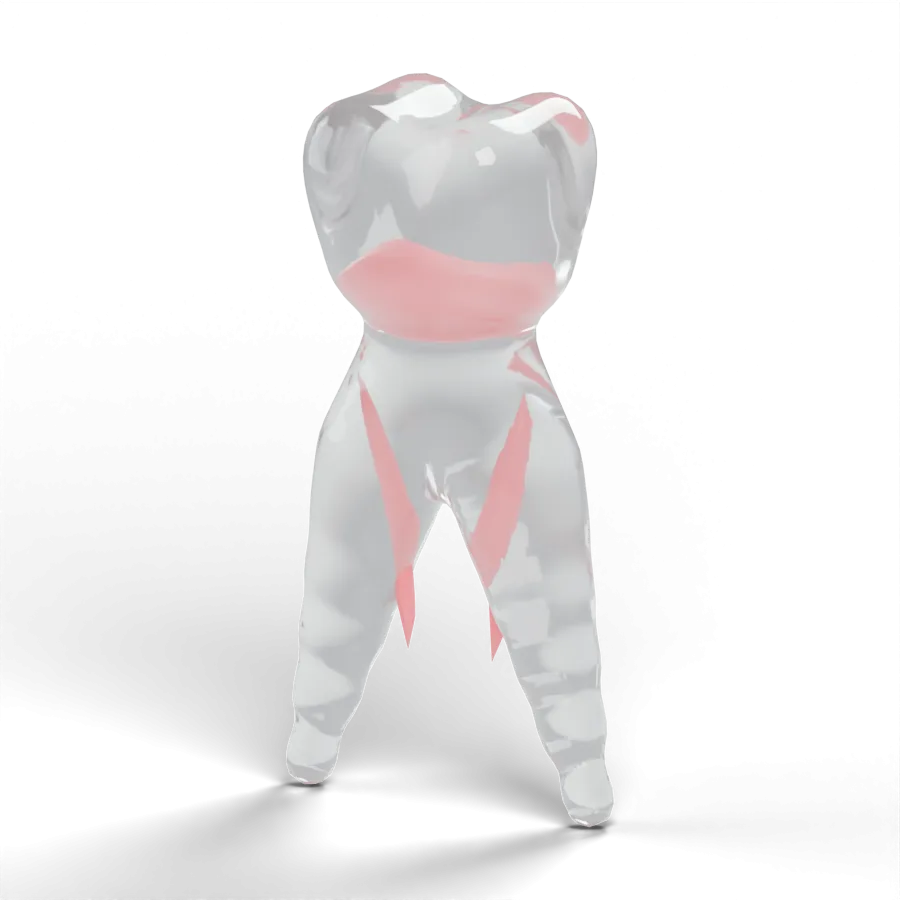
What is root canal treatment?
When decay passes through the enamel and dentine and reaches the living tissue at the centre of the tooth, the pulp, that tissue becomes inflamed. Root canal treatment cleans out this tissue, shapes the canal and fills it so that it is sealed.
The aim is to avoid extracting the tooth. In most cases your own tooth, kept healthy, works better than anything that can replace it. Implants exist to fill the gap left by a tooth that has already been lost. We do not recommend extracting a tooth that can be saved just to replace it with an implant.
Does it hurt?
This is the treatment people misunderstand most. Root canal treatment is done to end pain, not to cause it. It is carried out under local anaesthetic, and what you feel is close to having a filling. The pain people remember is usually the pain of the infection before treatment.
In teeth with very severe inflammation, the anaesthetic can take a little longer to work. In that case more anaesthetic is given and we continue once the area is fully numb. For a few days afterwards the tooth may be tender when chewing. This settles with simple painkillers.
How can you tell you need a root canal?
- Pain triggered by hot or cold that lingers for a long time
- Throbbing pain that gets worse when you lie down at night
- Pain when you press on the tooth or chew
- Swelling in the gum or a pimple-like bump
- The tooth turning darker
Pain stopping does not mean the tooth has healed. When the nerve dies, the pain stops too. The infection continues quietly at the root tip and sometimes shows itself years later as a swelling.
Why does waiting make things harder?
When the pain eases for a while, it is easy to put treatment off. But as the infection spreads into the bone around the root tip, treatment takes longer and needs more sessions. Beyond a certain point the bone that supports the tooth is affected too, and the chance of saving it falls. If you want to be seen the same day for toothache, our emergency dentist page explains how to reach us.
Who is it not suitable for?
Not every tooth can be saved with root canal treatment. It may not succeed in teeth with a vertical root crack, where decay has reached below the bone level, or where so much gum and bone has been lost that it can no longer hold the tooth. In these cases we discuss tooth extraction and how the gap will be filled afterwards. The X-ray and examination show which path is right.
How does treatment progress?
- Examination and X-ray. We assess the condition of the tooth, the shape of the root and whether there is infection at the root tip.
- Anaesthetic and isolation. The area is numbed. The tooth being treated is kept separate from saliva.
- Cleaning and shaping. Decayed and inflamed tissue is removed, and the canals are widened with fine instruments and disinfected.
- Filling. The canals are filled with a sealing material and the top of the tooth is closed.
- Final restoration. Depending on the tooth, a filling or a crown is placed.
Most teeth are finished in 1-2 sessions, each lasting about 45-90 minutes. If there is widespread infection at the root tip, medicine may be placed in the canals and left for a few sessions. If you are coming from central Trabzon or nearby districts such as Arsin or Akçaabat, we try to fit the sessions around your working hours. The practice is also open on Saturdays from 09:00 to 14:00. If you are visiting Trabzon only briefly, tell us your travel dates so we can see whether the treatment can be completed before you leave.
Is a crown needed afterwards?
Usually, yes. A tooth that has had root canal treatment loses its blood supply and becomes brittle. Chewing forces are especially high on back teeth. A root-treated tooth without a crown may break within a few years. That is why we often plan a zirconia crown after treatment.
Can root canal treatment be redone?
Yes. Years after a root canal treatment, infection can return at the root tip. This is often because a canal could not be cleaned the first time, or because the filling on top has leaked over time. In that case the old filling material is removed and the canals are cleaned and filled again. This is called root canal retreatment. It is not possible in every case, but it saves many teeth from extraction.
After treatment
Do not eat until the numbness wears off, or you may bite your cheek. Avoid chewing hard food on that side until the permanent filling or crown is in place. Tenderness eases within a few days. If swelling appears or the pain keeps getting worse, call our dental clinic in Trabzon. A root-treated tooth can still decay, so look after it just like your other teeth.
Frequently asked questions
Is root canal treatment painful?
The procedure is done under local anaesthetic, and what you feel is usually close to having a filling. For a few days afterwards the tooth may be tender when chewing, which settles with simple painkillers.
How many sessions does root canal treatment take?
Most teeth are finished in 1-2 sessions, each lasting about 45-90 minutes. If there is widespread infection at the root tip, more sessions may be needed.
Do I need a crown after root canal treatment?
Often yes, especially for back teeth. A tooth that has had root canal treatment becomes brittle, and without a crown it may break within a few years.
If the pain has stopped, do I still need root canal treatment?
Yes, you may. When the nerve dies, the pain stops too, but the infection can continue quietly at the root tip. Only an examination and an X-ray can show this.
Root canal treatment or extraction and an implant?
If the tooth can be saved, root canal treatment is usually recommended first. If the root is fractured or the damage is very advanced, extraction and an implant are discussed.

Written and reviewed by: Dt. Ahmet Alper Güler
Dentist in Trabzon. Last updated: November 16, 2026. This article is general information; the right treatment for you is decided after an examination.
Book an examination
Call us or choose a time that suits you in the online booking system.