Tooth extraction is the removal, under local anaesthetic, of a tooth that is too damaged to save or that is causing problems. A simple extraction often takes a few minutes, while impacted wisdom teeth may need surgical removal. Not spitting, not using a straw and not smoking for the first 24 hours has a direct effect on healing.
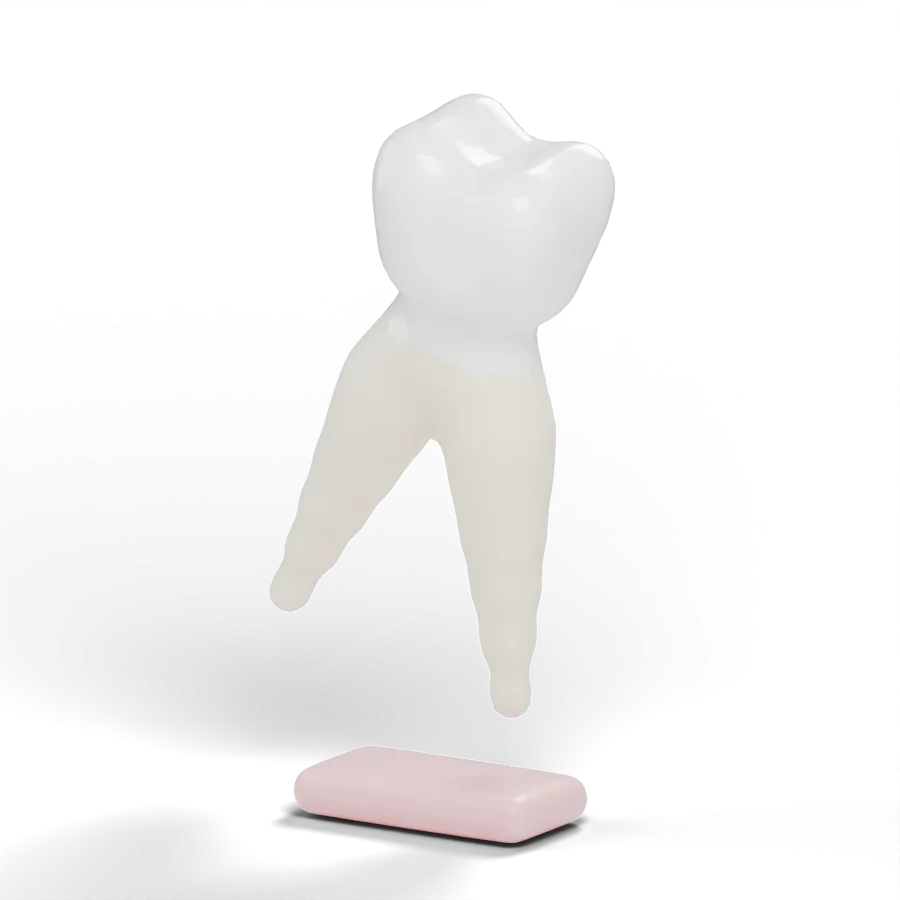
When is a tooth extraction needed?
Tooth extraction is the removal, under local anaesthetic, of a tooth that is too damaged to save or that is causing problems in the mouth. Our priority is always to keep the tooth. Extraction comes up when other options are exhausted, or when keeping the tooth would cause greater harm.
The main situations that may call for an extraction are:
- Decay that has reached below the root level and cannot be repaired with a filling or crown
- Teeth with a vertically cracked or broken root
- Loose teeth that have lost their bone support through advanced gum disease
- Impacted or partly erupted wisdom teeth that keep getting infected and cannot be kept clean
- Extractions needed to make space as part of an orthodontic plan
- Baby teeth that are blocking the adult tooth from coming through
Not every painful tooth needs to come out. A tooth with an inflamed nerve can often be saved with root canal treatment. That is why we decide on extraction only after an examination and an X-ray.
Simple and surgical extraction
A simple extraction is done on teeth that are visible in the mouth and have straight roots. Once the area is numb, the tooth is loosened from its socket and removed. It often takes a few minutes.
A surgical extraction is needed for teeth that are still inside the bone, have a broken root or have curved roots. The gum is opened, a little bone around the tooth is removed if needed, or the tooth is divided into pieces and taken out. Stitches are placed at the end.
Impacted wisdom tooth removal
Wisdom teeth (third molars) usually come through between the ages of 17 and 25. If there is not enough room in the jaw, they stay partly or fully inside the bone. A partly erupted wisdom tooth traps food under the gum that covers it. Repeated swelling, difficulty opening the mouth and a bad taste can all be linked to this. Decay forming on the back of the molar in front of it is another common problem.
But not every impacted wisdom tooth has to be removed. One that causes no problems, can be kept clean and does not harm the neighbouring tooth can be monitored. An X-ray comes first. If the root of a lower wisdom tooth appears close to the jaw nerve, a 3D CT scan is requested when needed. Because the scan shows the distance between nerve and root clearly, it lets us assess the risk in advance. In some difficult cases we may refer you to an oral and maxillofacial surgeon.
Removing an impacted wisdom tooth usually takes 20-45 minutes. Swelling peaks on the 2nd or 3rd day and then goes down. Opening the mouth may be difficult for a few days. When planning, we suggest leaving a few quiet days in your work, school or travel schedule.
What we need to know before an extraction
Tell us about any medicines you take, especially blood thinners, medicines for bone loss and heart medicines. Do not stop a blood thinner on your own. If needed, the decision is made together with the doctor who prescribed it. Pregnancy, heart valve disease, uncontrolled diabetes or a bleeding disorder can change the timing of an extraction.
After the extraction
- Bite firmly on the gauze placed in your mouth for 30-45 minutes.
- For the first 24 hours, do not rinse, spit or use a straw. The blood clot in the socket is the basis of healing.
- Do not smoke. Smoking can dislodge the clot and lead to dry socket.
- On the first day, apply something cold to the outside of the cheek on and off. Do not use a hot compress.
- Once the numbness wears off, eat lukewarm or cold, soft food. Do not chew on the extraction side.
- Brush your teeth, but do not touch the extraction area on the first day.
- If stitches were placed, they are usually removed at a check-up 7-10 days later.
If 2-4 days after the extraction the pain is getting worse instead of better, spreads towards the ear and no clot is visible in the socket, this may be dry socket (alveolitis). Bleeding that will not stop, spreading swelling or a fever are also reasons to call without waiting. Our emergency dentist page explains what to do outside opening hours.
Filling the gap
If the gap left by a tooth from the front or middle of the mouth is left empty, the neighbouring teeth slowly tilt, the opposite tooth over-erupts and the bite changes. That is why we also discuss how the gap will be filled before the extraction. Once the socket has healed, an implant, a bridge or a denture can be considered. Wisdom teeth usually do not need replacing.
At our Trabzon dental clinic, the same dentist handles every step, including the extraction. If you are coming from central Trabzon or the surrounding districts, we suggest choosing an extraction date that lets you rest for the following few days.
Frequently asked questions
Does a tooth extraction hurt?
Extractions are done under local anaesthetic. You feel pressure during the procedure, but sharp pain is not expected. Pain once the anaesthetic wears off is usually controlled with simple painkillers.
Does an impacted wisdom tooth always have to come out?
No. A wisdom tooth that causes no problems, can be kept clean and does not harm the neighbouring tooth can be monitored. Extraction is recommended if there is repeated infection, decay or damage to the neighbouring tooth.
When can I eat after an extraction?
You can eat once the numbness has worn off. On the first day, choose lukewarm or cold, soft food and do not chew on the extraction side.
I take blood thinners. Can I have a tooth extracted?
Often yes, but do not stop the medicine yourself. Tell us which medicine you take at the examination, and if needed the decision is made together with the doctor who prescribed it.
What should I do if the pain gets worse 2-3 days after an extraction?
This may be a sign of dry socket (alveolitis). Call us without waiting, as it can be eased with a short treatment.

Written and reviewed by: Dt. Ahmet Alper Güler
Dentist in Trabzon. Last updated: November 16, 2026. This article is general information; the right treatment for you is decided after an examination.
Book an examination
Call us or choose a time that suits you in the online booking system.