If the teeth on both sides of the gap are healthy and there is enough bone, an implant usually comes first because it does not touch the neighbouring teeth. If those teeth already need crowns, if the bone is insufficient or if you prefer to avoid surgery, a bridge can be a sensible option. The decision is made after an examination and X-rays.
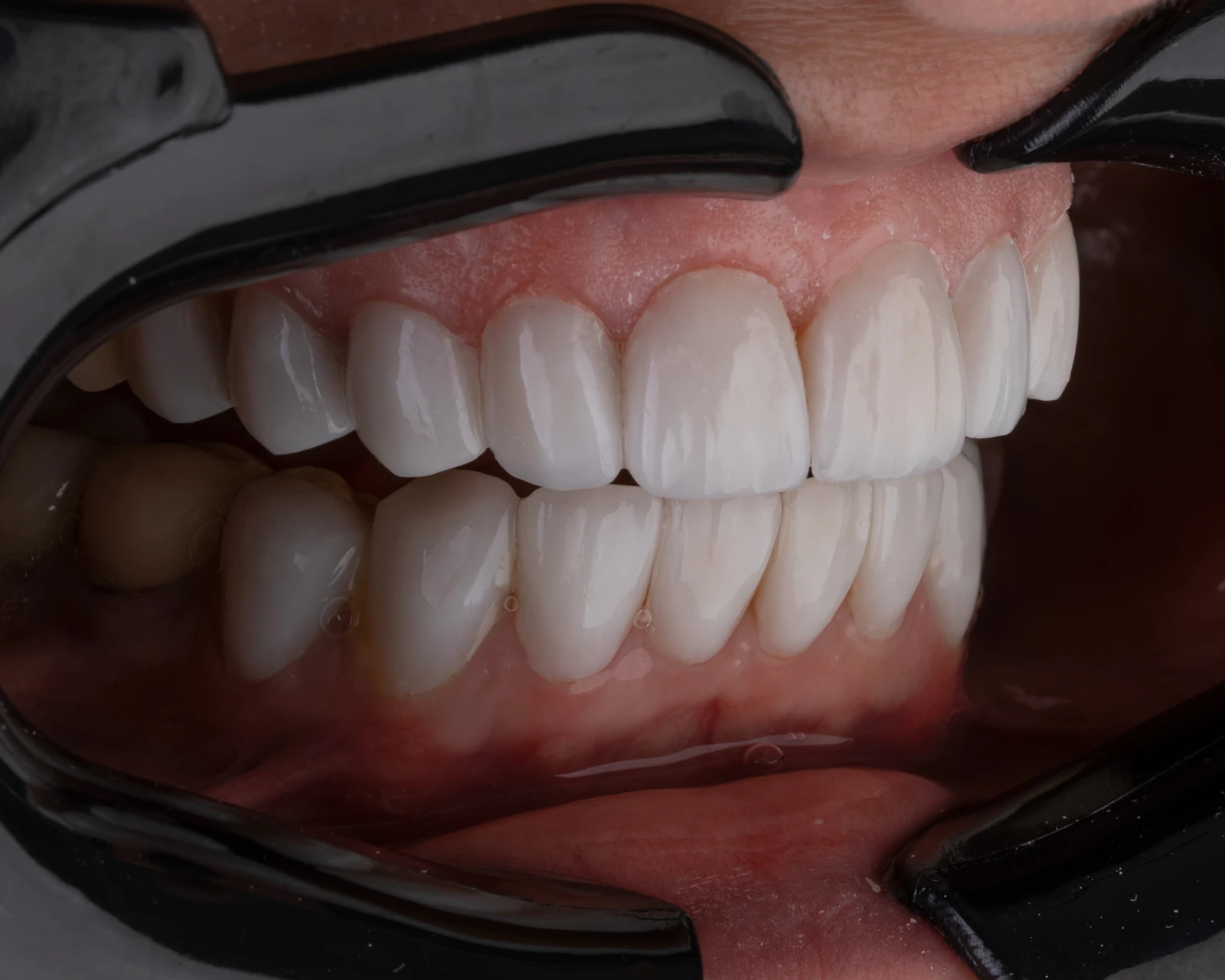
The short answer
If the teeth on both sides of the gap are healthy and the jawbone is sufficient, an implant is often the more conservative option because it does not touch the neighbouring teeth. If those teeth already have large fillings or need crowns, if the bone is insufficient, or if your general health does not suit surgery, a bridge can be a good solution. Both have their place. An examination and X-rays show which one suits you.
What does each treatment do differently?
An implant is made up of a titanium root placed in the jawbone and a tooth fitted on top. It fills the gap on its own and takes no support from the teeth beside it.
A bridge uses the teeth on either side of the gap as supports. These teeth are reduced and crowned, and the missing tooth is attached to those crowns to close the gap. The whole bridge is cemented in place as a single piece.
Comparison table
| Topic | Implant | Bridge |
|---|---|---|
| Neighbouring teeth | Left untouched | Reduced to take crowns |
| Surgery | Needed (under local anaesthetic) | Not needed |
| Bone | Enough bone is needed, otherwise a graft is done | Bone volume is not decisive |
| Treatment time | Often 2-6 months, longer with a graft | Usually 1-3 weeks |
| Bone loss | Slows bone loss because it puts load on the bone | The bone under the missing tooth keeps shrinking |
| Cleaning | Brush and floss like a natural tooth | Special floss or an interdental brush under the bridge |
| If a problem occurs | Only that tooth is affected | If a supporting tooth decays, the whole bridge may need to come off |
| Who needs extra care? | Uncontrolled diabetes, some bone medications and heavy smoking need careful assessment | May not suit weak supporting teeth or active gum disease |
When an implant comes first
If a single tooth is missing and the teeth on both sides are healthy with no fillings, an implant is usually discussed as the first option. A bridge would mean cutting down those two healthy teeth, and that cannot be undone.
If several back teeth are missing and there is no tooth at the very back to act as a support, a bridge may not be possible at all. In such cases an implant-supported bridge or individual implants are considered.
Bone loss is another factor. After a tooth is extracted, the bone in that area slowly thins. An implant passes chewing forces into the bone, which slows this process. With a bridge, the bone under the missing tooth gets no stimulation and may sink over the years.
When a bridge makes sense
The teeth next to the gap may already have large fillings, be broken or have had root canal treatment. If these teeth will need crowns one day anyway, a bridge does two jobs at once: it protects the supporting teeth and closes the gap.
If there is very little bone and the patient does not want extra surgery such as a bone graft or sinus lift, a bridge gets a result with fewer procedures. With uncontrolled diabetes, certain bone loss medications or a history of radiotherapy to the head and neck, the dentist may also advise avoiding surgery.
Time matters too. A bridge is usually completed within a few weeks, while an implant needs time to fuse with the bone.
A third option: a removable denture
For some patients neither an implant nor a bridge is suitable. If many teeth are missing, the supporting teeth are weak and surgery is not wanted, a removable partial denture can also be discussed. It involves fewer procedures and is held on the neighbouring teeth with clasps. Comfort and chewing efficiency are lower than with fixed treatments, and getting used to it can take time. Still, in some cases it can be a sensible interim solution.
How many visits will you need?
With an implant, the first session is placement. Stitches are checked 7-10 days later, then after healing there are a few more visits for impressions and fitting the crown. A bridge usually needs one session to prepare the teeth and take impressions, then try-in and cementing sessions. For people with busy schedules or who travel in from outside the city, the number of visits is an important part of planning. If you live abroad or are only visiting Trabzon, keep in mind that an implant cannot usually be finished in one short trip, so it is worth talking through the timeline with your dentist first.
Choice of material
Both implant crowns and bridges can be made of porcelain fused to metal or zirconia. Zirconia is often chosen for front teeth because it lets light through more naturally. The material is chosen according to the position of the tooth, the bite force and your aesthetic expectations. For more detail, see our article what are zirconia crowns.
How to compare costs
Comparing a single implant with a three-unit bridge only by the amount paid at the start can be misleading. A bridge involves three crowns. An implant may involve extra items such as a bone graft, a CT scan or a sinus lift. Possible future problems with the supporting teeth should also be taken into account. We explain what changes the total in our article what dental implant costs depend on.
The decision is made at the examination
This table gives a general framework. The right option for you is chosen by looking at the condition of your teeth, bone volume, gum health, general health and expectations together. If you would like to talk through the options for a missing tooth with a dentist in Trabzon, we start with an oral examination and X-rays at our dental clinic in Trabzon. Our dental implants page explains the process step by step.
Frequently asked questions
Are healthy teeth cut down for a bridge?
Yes. A bridge is held by the teeth on either side of the gap, and these teeth need to be reduced to take crowns. If they already have fillings or crowns, this drawback matters less.
Which lasts longer, an implant or a bridge?
Both can be used for many years when well cared for. Oral hygiene, smoking, gum health and regular check-ups have the biggest effect on how long they last.
Is a bridge finished faster?
Usually, yes. A bridge can be completed within a few weeks. With an implant, you often wait 2-6 months for it to fuse with the bone, and longer if a bone graft is needed.
What happens if a missing tooth is not replaced?
The neighbouring teeth can tilt into the gap, the opposing tooth can drift out of its socket and the bone in that area slowly shrinks. That is why it is best not to leave a gap for long.

Written and reviewed by: Dt. Ahmet Alper Güler
Dentist in Trabzon. Last updated: November 16, 2026. This article is general information; the right treatment for you is decided after an examination.
Book an examination
Call us or choose a time that suits you in the online booking system.