Whitening done under a dentist's supervision, on suitable teeth and with gel of the right strength, does not wear away enamel. The most common side effect is temporary tooth sensitivity lasting a few days, and gum irritation can also occur. The real risks come from products used without supervision and from teeth with untreated decay or gum recession.
The short answer
Whitening done under a dentist's supervision does not wear away enamel or damage the structure of the tooth. The gel breaks down the colour molecules inside the enamel. It does not sand down the surface of the tooth. The most common side effect is temporary sensitivity lasting a few days. Problems mostly come from unsupervised products, using them for too long, and teeth with untreated decay or gum recession.
How does whitening work?
The active ingredient in whitening gels is hydrogen peroxide or carbamide peroxide. These pass into the enamel and the dentine beneath it, breaking down coloured molecules that have built up over the years. The tooth then turns a lighter shade.
This should not be confused with removing surface stains. A scale and polish removes tea, coffee and tobacco stains from the surface. Whitening lightens the tooth's own colour. Often a cleaning is done first, followed by whitening.
Possible side effects
Sensitivity: During whitening and for a few days afterwards, your teeth may twinge with hot and cold. Some people feel short, sharp zings. This is temporary. If the sensitivity is marked, whitening is paused for a day or two, or desensitising products are recommended.
Gum irritation: If the gel touches the gum, it can turn white and sting. In in-office whitening, the gum is protected beforehand. With at-home whitening, it matters that the tray fits well and not too much gel is used.
Uneven colour: If there are white spots on the teeth, they may look more noticeable in the first days of whitening. This usually evens out over time.
Who is it not suitable for?
- People with untreated decay (the gel can pass through the cavity and cause pain)
- People with gum disease or marked gum recession
- People with large fillings or crowns on their front teeth (a colour difference will appear)
- Pregnant and breastfeeding women
- Young children
- Single teeth that have darkened after root canal treatment (a different method is used for these)
That is why an examination before whitening is essential. Any decay is treated, gum treatment is done for gum problems, and then whitening is planned.
In-office and at-home whitening
In-office whitening is done in a single session with a stronger gel. The gum is protected and the gel is renewed at set intervals. A session usually takes 60-90 minutes, and the result shows quickly. This can suit visitors to Trabzon with limited time, as long as the examination comes first.
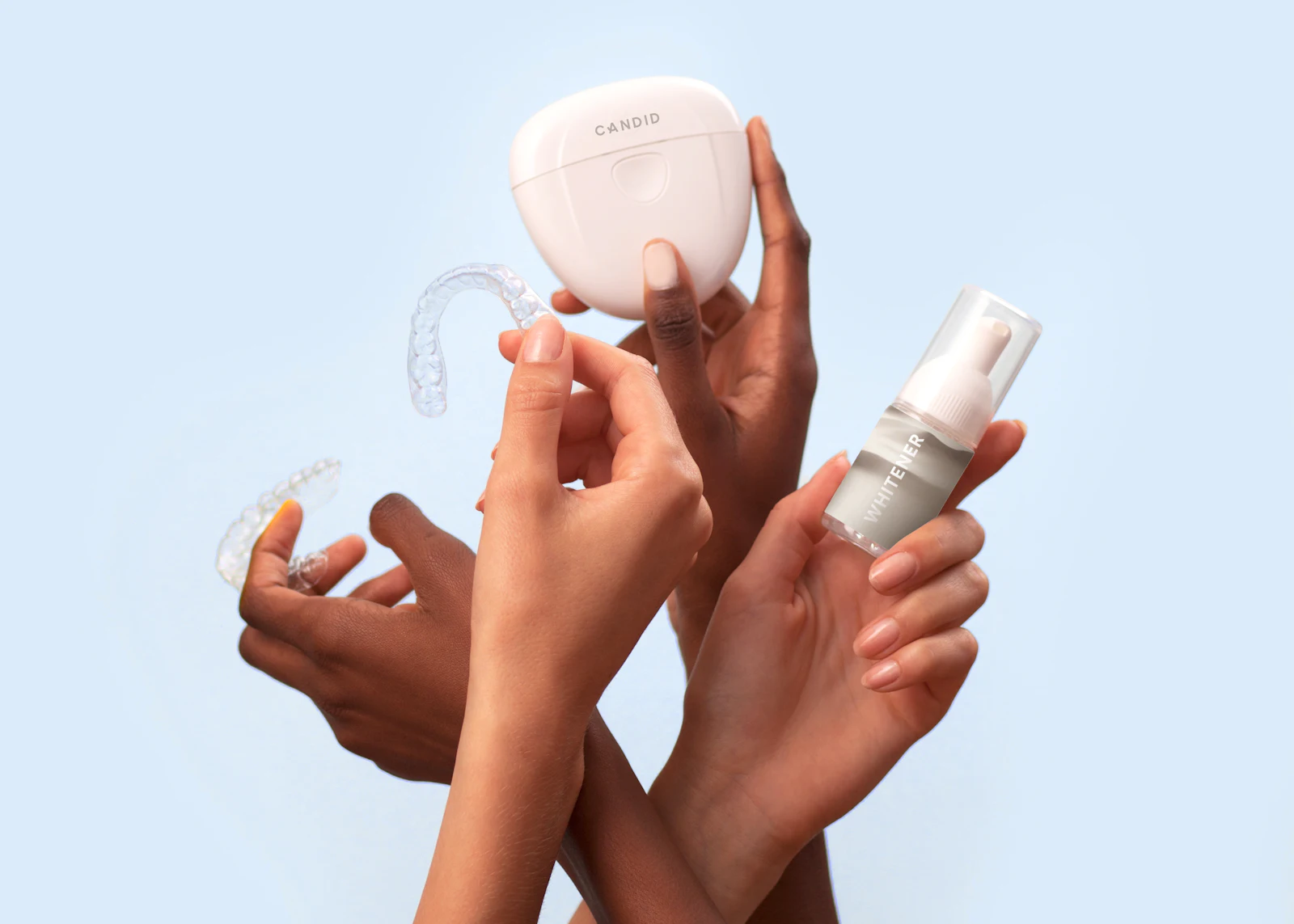
At-home whitening uses clear trays made for you from an impression of your mouth. You put a lower-strength gel in the trays and wear them at set times, usually over 1-3 weeks. It is slower but controlled, and sensitivity may be less common. The trays can also be used for touch-ups later.
It is also important to talk about expectations at the start. Not every tooth lightens by the same amount, and results vary from person to person. If the starting colour is recorded with a shade guide, it is easier to compare the change afterwards.
Some patients have both methods combined. Which one suits you depends on the colour of your teeth, your sensitivity and your expectations.
Products without dentist supervision
High-strength gels bought online, ready-made trays and products such as charcoal powder come up often. A gel of unknown strength can burn the gum. Ready-made trays that do not fit spread the gel onto the gum. Abrasive powders and some toothpastes labelled "whitening" can wear down the enamel over time and even make the tooth look more yellow, because as the enamel thins, the yellowish dentine underneath shows through more.
What to watch after whitening
For the first 48 hours your teeth pick up colour more easily. During this time it is best to avoid tea, coffee, cola, red wine, tomato paste and smoking. In the long term, brushing twice a day and a scale and polish every 6-12 months help keep the colour.
After whitening you may notice that old fillings on your front teeth no longer match. These fillings are replaced about two weeks after whitening ends, once the colour has settled.
Why do teeth turn yellow?
Tooth colour is not only about the surface. Enamel is a semi-translucent layer that partly shows the yellowish colour of the dentine beneath. With age, enamel thins, dentine thickens and teeth naturally darken. Tea, coffee, smoking and dark-coloured foods speed this up.
Some discolouration comes from inside the tooth. Certain antibiotics taken in childhood, too much fluoride or a knock to the tooth can leave different shades. Which cause dominates also determines how much whitening can achieve. That is why the examination looks at the source of the colour first.
Does whitening solve every colour problem?
No. Grey or banded discolouration linked to certain medicines, and stains caused by the structure of the tooth, respond only partly to whitening. In such cases options such as zirconia crowns or veneers are discussed.
If you are considering teeth whitening in Trabzon, the first step is to see whether your teeth are suitable for it. At our dental clinic in Trabzon, we choose the right method together after an examination. You can find the details on our teeth whitening page.
Frequently asked questions
How long does sensitivity last after whitening?
It usually passes within a few days. If it is marked, whitening can be paused, and a desensitising toothpaste or gel may be recommended.
Do crowns and fillings whiten too?
No. Whitening gel only works on natural tooth tissue. If there are fillings or crowns on the front teeth, they may need to be replaced after whitening to match the new colour.
How long do whitening results last?
It varies from person to person. Tea, coffee, smoking and red wine make the colour return faster. Touch-ups can be done from time to time with at-home trays.
Can I have my teeth whitened during pregnancy?
Cosmetic whitening is usually postponed during pregnancy and breastfeeding. Only necessary dental treatment is done during this period.

Written and reviewed by: Dt. Ahmet Alper Güler
Dentist in Trabzon. Last updated: November 16, 2026. This article is general information; the right treatment for you is decided after an examination.
Book an examination
Call us or choose a time that suits you in the online booking system.