This treatment is not provided at our practice. The information on this page is for general guidance only.
Orthodontics corrects crowded teeth and the way the upper and lower jaws fit together, known as the bite. It is done with braces or clear aligners and takes 12-24 months in most cases. There is no age limit. The orthodontist decides which method suits a patient after X-rays and impressions are taken.
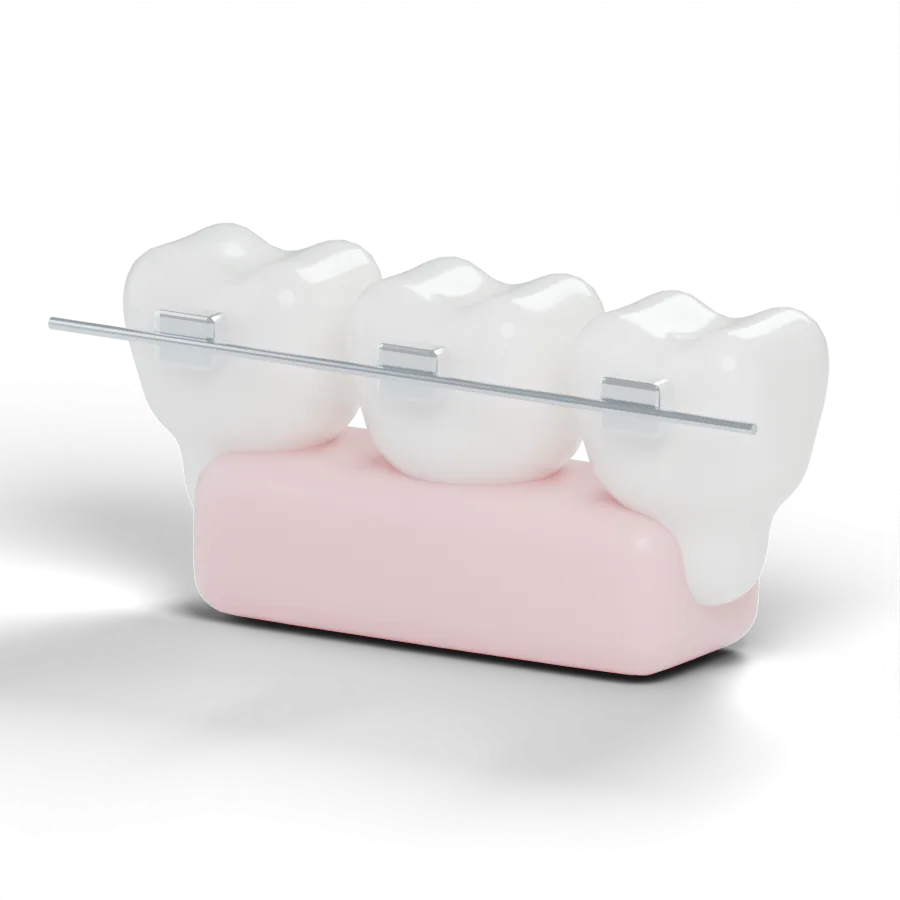
What is orthodontics?
Orthodontics corrects crooked teeth and the way the upper and lower jaws fit together. It is not just about straightening teeth; the real issue is the bite. This treatment is carried out by a specialist in orthodontics, an orthodontist.
Crowding can seem like a purely cosmetic concern. But it creates surfaces a toothbrush cannot reach, which raises the risk of decay and gum disease. A poor bite can put too much load on certain teeth, leading to wear over time and strain on the jaw joint. Straight teeth are easier to clean, and chewing forces are spread more evenly.
Who is it suitable for?
The main situations that call for orthodontic treatment are:
- Teeth overlapping (crowding) or gaps between them
- Upper teeth covering the lower ones too much, or lower teeth closing in front
- A gap left between the front teeth when the mouth is closed
- Crossbite, where some upper teeth sit inside the lower teeth
- Neighbouring teeth drifting into the gap left by a lost tooth
Before treatment starts, there should be no active decay or untreated gum disease in the mouth. If there is, it needs to be treated first. Moving teeth while the gums are inflamed can speed up bone loss, so gum treatment comes first when needed.
Is there an age limit?
No. While the bones are still growing, roughly between ages 9 and 14, some jaw problems are easier to correct. That is why an early check-up with an orthodontist is recommended for children.
Teeth can also be moved in adulthood. Many people have treatment at 40; it just takes a little longer.
Braces or clear aligners?
Metal or ceramic braces work in every case and are preferred for complex tooth movements. Being visible is their main drawback. Ceramic brackets are close to tooth colour, so they attract less attention.
Clear aligners are removable, cause no trouble when eating or brushing, and are hard to notice from a distance. But they must be worn 20-22 hours a day, so they need discipline. They do not suit every case and are not enough on their own for serious bite problems.
Which one suits a patient becomes clear after X-rays and impressions, not at the very start.
How does treatment progress?
- Examination and records. The orthodontist examines the mouth, X-rays are taken, and impressions and photographs of the teeth are made.
- Plan. The orthodontist explains which tooth will move where, which method will be used and the estimated duration. If needed, an extraction or slight reshaping between the teeth is part of the plan.
- Fitting. The brackets are bonded to the teeth, or the first set of aligners is handed over.
- Check-ups. With braces, an adjustment is usually made every 4-6 weeks. With clear aligners, the patient moves to a new aligner at set intervals and progress is checked.
- Retention. Once the teeth are where they should be, the braces are removed and the retention period begins.
Total treatment time is 12-24 months in most cases. It can be shorter for mild crowding and longer for problems involving the jaw bones. Because treatment needs regular check-ups over many months, being able to attend them consistently matters.
What does it feel like in the first weeks?
For 2-3 days after braces are fitted or a new aligner is started, the teeth feel pressure and are tender when chewing. This shows they have started to move. Soft food and, if needed, a simple painkiller make this period easier. Small sores can appear where brackets rub against the cheek or lip. Placing orthodontic wax over the bracket reduces the rubbing. If a wire is poking or a bracket comes off, the orthodontist running the treatment should be told without delay; it can often be fixed in a short visit.
Care during treatment
Wires and brackets trap food. Brushing after every meal and using interdental brushes is necessary. Hard and sticky foods (hard nuts, caramel, chewing gum) can break a bracket off. People wearing clear aligners should take them out when eating or drinking anything other than water, and brush their teeth before putting them back in.
When treatment ends
Teeth tend to move back to where they were. That is why retention begins at the end of treatment: a thin wire is bonded behind the teeth, or a retainer to wear at night is provided. Stopping retention can undo two years of treatment in a few years.
For those who want lighter teeth once orthodontics is finished, teeth whitening can be a good final step.
Frequently asked questions
How many months does orthodontic treatment take?
In most cases between 12 and 24 months. It can be shorter for mild crowding and longer for problems involving the jaw bones.
Are clear aligners suitable for everyone?
No. Clear aligners work well for mild to moderate crowding but may not be enough on their own for serious bite problems. The orthodontist decides on suitability after X-rays and impressions.
Does it hurt when braces are fitted?
Fitting braces is usually painless. In the first days, and for 2-3 days after each adjustment, the teeth may feel pressure and tenderness.
Can adults have orthodontic treatment?
Yes. As long as the gums and bone are healthy, teeth can be moved at any age; treatment may just take a little longer.
Will teeth move back after treatment?
Teeth do tend to return to their old position. To prevent this, a retainer wire or a night-time retainer is used at the end of treatment.

Written and reviewed by: Dt. Ahmet Alper Güler
Dentist in Trabzon. Last updated: November 16, 2026. This article is general information; the right treatment for you is decided after an examination.
Book an examination
Call us or choose a time that suits you in the online booking system.