Before having an implant, tell your dentist your full medical history and the medicines you take, and ask which implant brand will be used, whether a CT scan is needed and whether your bone is sufficient. At the end of treatment, ask for the implant's product card (implant passport). Stopping smoking, keeping blood sugar under control and not missing check-ups have a direct effect on success.
If you are considering dental implants, start by gathering your medical history. At the examination, ask which implant will be used, whether a CT scan is needed and whether your bone is sufficient. When treatment is finished, ask for the implant's product card, known as the implant passport. Smoking, diabetes and medicines you take regularly have a direct effect on healing, so do not keep them from your dentist. Below you will find notes that help from the examination through to aftercare, and a short checklist at the end.
Before the examination
The first examination is where you find out whether an implant is right for you. Preparing a few things in advance helps you get the most out of it.
- Write down the names of all the medicines you take regularly. Blood thinners, blood pressure medicines and medicines for bone loss are especially important.
- If you have a chronic condition such as heart disease, diabetes, a thyroid or kidney problem, bring your latest test results.
- If you have a recent dental X-ray or CT scan, bring it. It may save an unnecessary repeat.
- Think about what you want. Do you want to replace a single missing tooth, or get rid of a removable denture? Your expectations change the plan.
Also be aware that a final plan may not come out of the first examination. The bone cannot be fully assessed without imaging. That is why information given over the phone or without an examination often changes later.
If you are planning implants in Trabzon from abroad or during a visit, bring your records in English or Turkish if you can, and tell us how long you will be in the city. The healing period takes months, so the number and timing of visits should be agreed before treatment starts.
Questions to ask at the examination
Do not hesitate to ask. A good dentist answers these questions openly, and may explain some of them before you ask.
Which implant will be used?
There are many implant brands on the market. More than the brand itself, what matters is that the product carries a CE mark and is registered in Turkey's Ministry of Health product tracking system. Also ask whether it is a widely used system. If a part needs replacing years later, or if you move to another city or country, spare parts for a widely used system are much easier to find.
Do I need a CT scan?
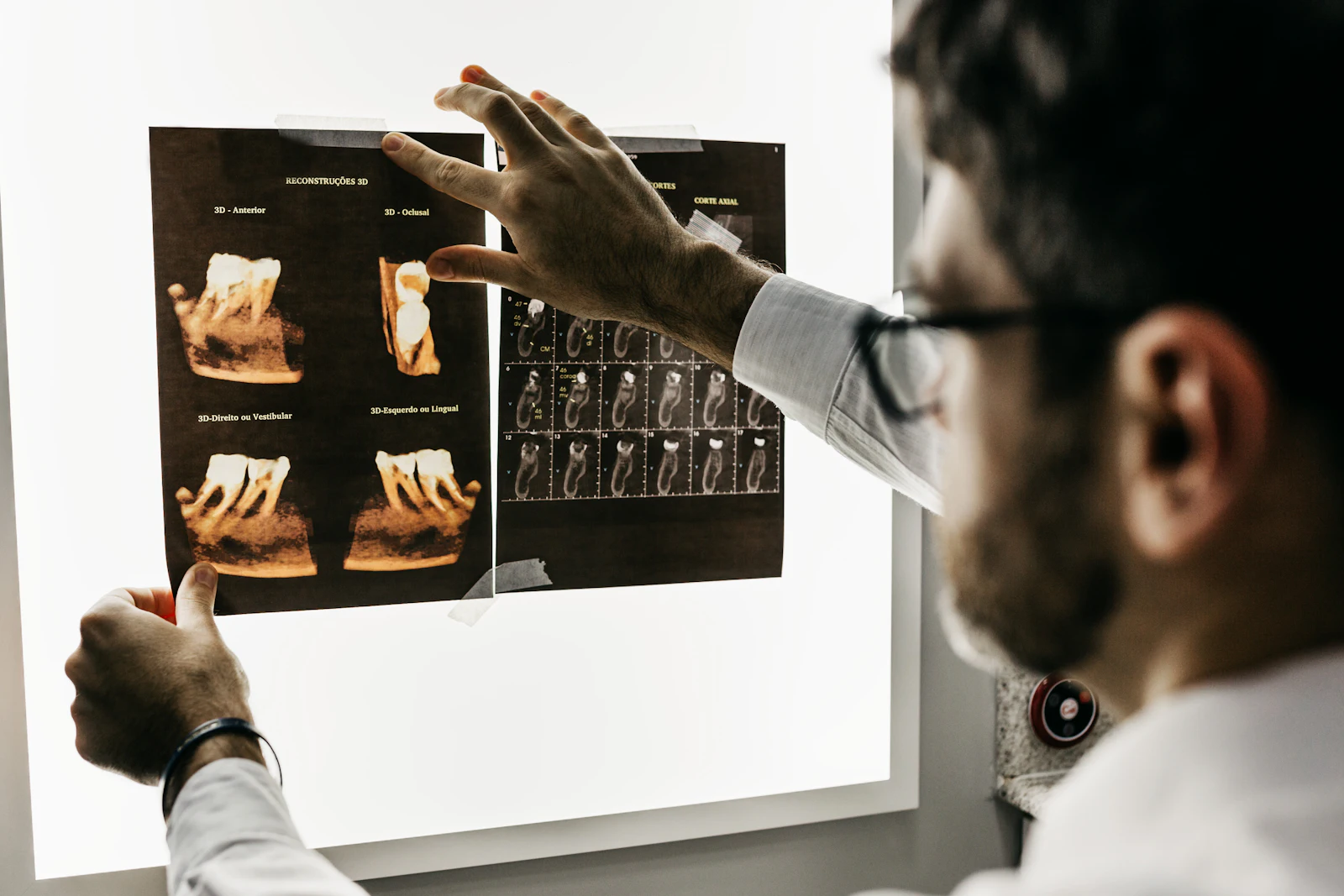
A panoramic X-ray gives a general idea but does not show the width of the bone. Near the nerve canal in the lower jaw or the sinus in the upper jaw, or where the bone looks thin, a 3D CT scan is requested when needed. The scan shows in advance at what length and angle the implant should be placed.
Is my bone sufficient?
After a tooth is extracted, the bone in that area slowly shrinks. Where a gap has been empty for a long time, there may be too little bone to hold an implant. In that case, bone grafting or, in the upper jaw, a sinus lift may be needed. These procedures lengthen treatment, so it is good to know from the start.
What will go on top?
The implant is the screw that stays inside the bone. The part you see in your mouth is what goes on top: a single crown, a bridge on several implants, or an implant denture for a jaw with no teeth. Ask what material it will be made of (zirconia, metal-based porcelain and so on), whether it will be fixed or removable, and when it will be fitted. People sometimes discuss the implant and skip this part, yet it is the part you will use every day.
Will I get an implant passport?
Discuss from the start what you should receive at the end of treatment. The document that will really help you is the implant's product card, also called the implant passport. It shows the implant's brand, model, width, length, serial number and the date it was placed. Keep this card. Ten years later, if you see another dentist, perhaps in another country, it is the easiest way to identify your implant.
Smoking, diabetes and medicines
For an implant to hold, the bone has to fuse with its surface. Three things affect this process most.
Smoking. Smoking reduces blood flow and slows wound healing. Fusion with the bone becomes harder, and the risk of bone loss around the implant rises in later years. Stopping is best. If you cannot, at least aim not to smoke at all in the few weeks before and after surgery.
Diabetes. Diabetes under control is not a barrier to implants in most cases. If blood sugar runs high, healing is delayed and the risk of infection rises. Your dentist may want to see your latest HbA1c result. If needed, the levels are first brought under control with your internal medicine or endocrinology doctor.
Medicines. If you take blood thinners, do not stop them on your own. If needed, your dentist will talk to the doctor who prescribed them. Some medicines used to treat bone loss, especially bisphosphonates given into a vein, can cause serious problems in the jawbone. Tell your dentist even if you used them in the past. Previous radiotherapy to the head and neck is also information that changes the plan.
Ask for the plan in writing
When the examination is over, what you remember is often incomplete. Especially with a plan involving several implants, bone grafting and the teeth on top, it is easy to mix up the details. So do not hesitate to ask for the treatment plan in writing. It should state how many implants go where, whether extra procedures are needed, what will go on top and the estimated time. You can read it calmly at home, talk it over with your family and, if you like, get a second opinion from another dentist. In a city like Trabzon, where dentists are easy to reach, a second opinion does not cost much time either. A good dentist will not mind the request.
Surgery day and the first week
The implant is placed under local anaesthetic. During the procedure you usually feel no pain, only pressure and vibration. Once the anaesthetic wears off, there may be tenderness and mild swelling for a few days. Most people manage comfortably with the painkiller their dentist recommends.
- Applying something cold on the first day reduces swelling. Do it on and off, for 10-15 minutes at a time.
- For the first 24 hours, do not rinse, do not drink through a straw and avoid hot drinks.
- Choose soft, lukewarm food. Do not chew on the implant side.
- Keep brushing your teeth, just take care around the surgical area.
- Stitches are usually removed within 7-14 days. Do not skip this check-up.
If swelling increases after the third day, you have a fever or bleeding does not stop, call your dentist without waiting.
The healing period
It takes time for the implant to fuse with the bone. This is usually 2-3 months in the lower jaw and 3-6 months in the upper jaw. If bone grafting was done, it can take longer. In some suitable cases a temporary tooth can be fitted to the implant on the same day, but this is not the right choice for every mouth.
During this period a temporary solution is usually made so you are not left with a gap. Patience is needed. Fitting the final tooth too early can disrupt fusion with the bone. That is also why it matters not to miss check-ups. If you live in Trabzon and the practice you choose is close to your home or work, these short check-ups are much easier to attend.
Long-term care
An implant cannot decay, but the gum and bone around it can become diseased. This is called peri-implantitis, and at an advanced stage it can lead to losing the implant. The good news is that it is not hard to prevent.
- Brush twice a day. Clean between the implant and the neighbouring tooth with an interdental brush or floss.
- If you have a bridge or a full denture, a water flosser helps clean underneath it.
- If you clench your teeth at night, tell your dentist. A night guard protects both the implant and what sits on top of it.
- Have a check-up every 6-12 months. Your dentist checks the gum around the implant and, if needed, the bone level with an X-ray.
If you notice bleeding gums, swelling around the implant or a bad taste, do not wait for your next check-up. Gum problems caught early often settle with gum treatment.
Checklist
Save this list on your phone or print it before your examination.
- Do I have a list of the medicines I take with me?
- Are my chronic conditions and latest test results ready?
- Did I ask which implant system will be used and why it was chosen?
- Did I find out whether a CT scan is needed?
- Is bone grafting or a sinus lift needed?
- Did I discuss the type and material of the teeth on top?
- Do I know how many sessions it will take in total and when the tooth will be fitted?
- Did we agree that I will receive an implant passport at the end of treatment?
- Do I have a plan to stop or cut down smoking?
- Will I be able to get to the practice easily for check-ups?
If you want to know what an implant is and what parts it has, see our What is a dental implant? article, and for what affects the cost, see the article on what dental implant costs depend on. You can find how implant treatment works at our Trabzon dental clinic on the dental implants page.
Frequently asked questions
What should I do before having an implant?
Bring a list of your medicines, any old X-rays and reports on chronic conditions to the examination. If you smoke, talk to your dentist about stopping or at least cutting down.
What is an implant passport?
It is a product card showing the brand, model, width, length and serial number of the implant placed in your mouth. Years later, if you see another dentist, this information is needed to find parts and plan the right treatment.
Can people with diabetes have implants?
Implants can often be placed in people with diabetes whose blood sugar is regularly under control. If blood sugar runs high, healing slows and the risk of infection rises, so the levels need to be brought under control first.
Can I smoke after an implant?
Smoking makes it harder for the bone to fuse with the implant and speeds up bone loss around it in the long term. It is recommended not to smoke at all, at least in the weeks before and after surgery.
What does the cost of an implant depend on?
It depends on the implant system used, how many implants are needed, extra procedures such as bone grafting or a sinus lift, and the type of tooth placed on top. Accurate information can only be given after an examination and any imaging needed.
Written and reviewed by: Dt. Ahmet Alper Güler
Dentist in Trabzon. Last updated: November 16, 2026. This article is general information; the right treatment for you is decided after an examination.
Book an examination
Call us or choose a time that suits you in the online booking system.