A sinus lift is used when there is not enough bone for an implant in the back of the upper jaw: the sinus membrane is gently raised and bone graft material is placed beneath it. If only a little bone is missing, it can be done in the same session as the implant. If a lot is missing, the bone is built up first and the implant is placed a few months later. Whether you need one is decided after an examination and a CT scan.
The short answer
A sinus lift is a bone augmentation procedure used when there is not enough bone to hold an implant in the back of the upper jaw. The thin membrane lining the floor of the sinus, just above the molars, is gently raised and bone graft material is placed beneath it. This creates enough bone height for an implant. If only a little bone is missing, the procedure can be done in the same session as the implant. If there is very little bone, the sinus lift is done first and the implant is placed a few months later. Whether you need one is decided after an examination and a CT scan.
Why is there sometimes too little bone in the upper jaw?
Once a tooth is extracted, the bone that surrounded it no longer has a job and gradually starts to shrink. Most of this loss happens in the first months and continues for as long as the gap remains. The back of the upper jaw has one more issue: the air spaces on either side of the nose, the sinuses, can expand downwards after teeth are lost.
With the bone shrinking from below and the sinus dropping from above, the bone height in the molar area can fall to just a few millimetres. An implant needs a certain length of bone to stay firmly in place. Without it, the implant either cannot be placed at all or risks protruding into the sinus.
Other things that increase bone loss include:
- A tooth having been missing for many years
- Long-standing infection or an abscess in the tooth before extraction
- Advanced gum disease
- Removable dentures worn for years that press on the bone
- Difficult extractions or broken roots
What is a bone graft?
Bone graft material fills in for missing bone and acts as a scaffold on which the body gradually builds its own new bone. It comes as a powder or granules. There are several types:
- Your own bone. Usually taken from another area inside the mouth. This means a second surgical site.
- Processed human bone. Processed and sterilised at tissue banks.
- Animal-derived bone. Mostly from bovine bone, with the organic part removed.
- Synthetic materials. Made in a laboratory and containing minerals similar to bone.
A thin membrane is often placed over the graft to help keep it in position. Which material is chosen depends on how much bone is missing, the area and the patient's preference. You are welcome to ask about this openly at your examination.
Bone graft is not only used in sinus lifts. It is also used straight after an extraction to preserve the socket, to support thin bone around an implant, or to increase the width of the jaw.
When is a sinus lift needed?
A sinus lift only comes up in the back of the upper jaw, where the premolars and molars sit. There is no sinus above the lower jaw or the front teeth. Whether you need one depends on questions like these:
- How much bone is there between the floor of the sinus and the edge of the jawbone?
- How wide and how dense is the bone?
- How many implants are planned, and how long do they need to be?
- Is there inflammation or any other problem in the sinus?
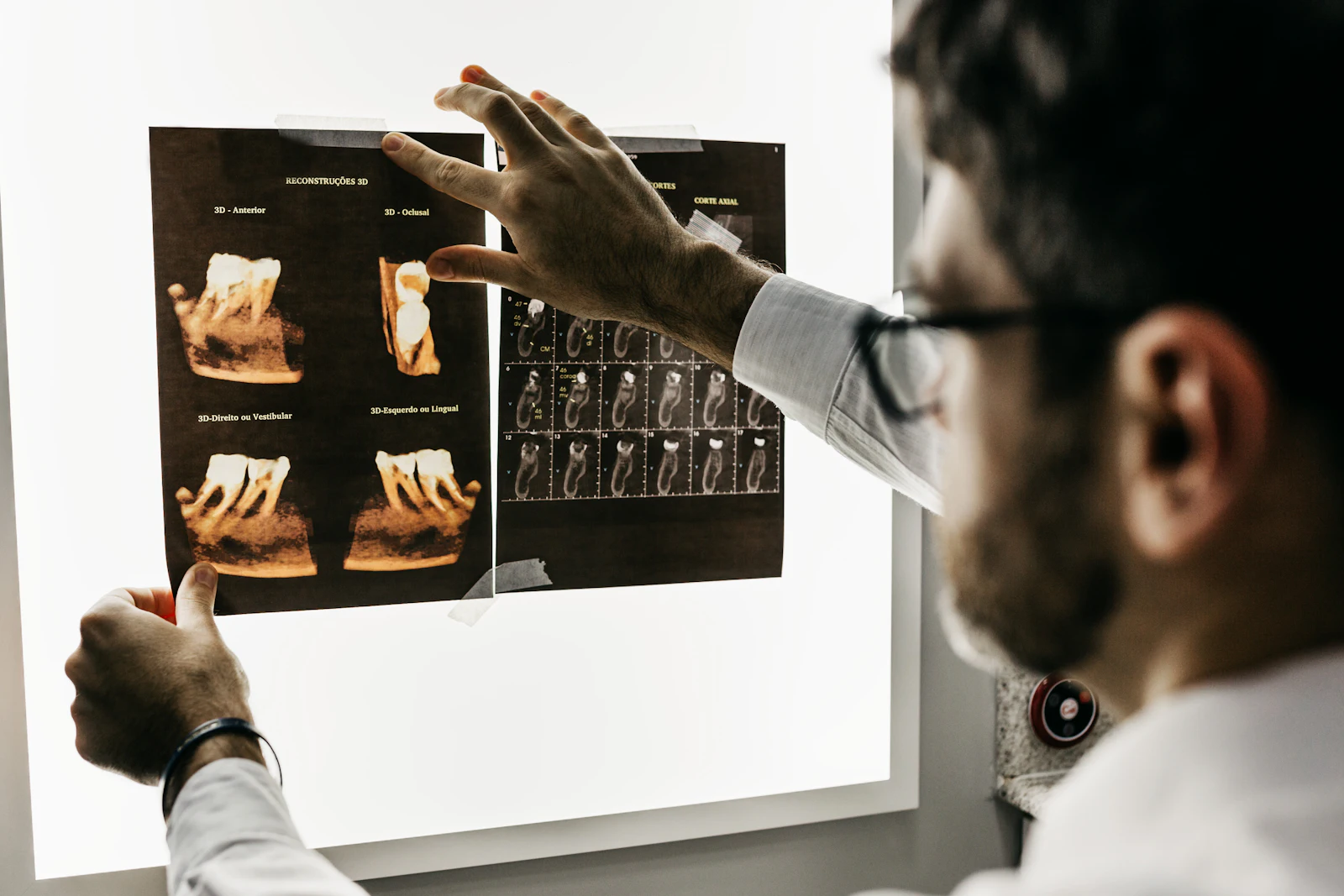
A panoramic X-ray gives a first impression, but a 3D CT scan is usually needed to decide. The scan measures the height and width of the bone to the millimetre and shows the condition of the sinus membrane. For some patients, shorter implants or placing the implant at a different angle can make a sinus lift unnecessary. The dentist decides which option suits you after the examination and imaging.
Open and closed sinus lift
The closed method
This is used when relatively little bone is missing. Working through the socket prepared for the implant, the floor of the sinus is gently pushed upwards with special instruments, bone graft is placed in the space created, and the implant is often placed in the same session. Because no separate window is opened, the procedure is done in a more limited area.
The open method
This is preferred when the bone height is very low. A small window is opened in the side of the jawbone, the sinus membrane is carefully lifted and the space beneath it is filled with bone graft. If the remaining bone is enough to hold the implant, it can be placed in the same session. If not, the graft is left to mature and the implant is placed later.
At our dental clinic in Trabzon, surgical procedures such as sinus lifts and bone grafts are carried out by an oral and maxillofacial surgeon, with Dt. Alper Güler present during the procedure. The examination, the assessment of the CT scan, the treatment plan, the tooth fitted on the implant and the check-ups are all with Dt. Alper Güler.
Healing time
In the first days after the procedure you may notice swelling, bruising on the cheek and a slightly bloody discharge from the nose. These usually ease within a few days. Stitches come out within 7-14 days.
The bone graft takes longer to mature. Depending on how much bone was missing, the material used and how you heal, this can range from a few months to longer. The bone is monitored with X-rays or CT scans at check-ups. For this reason, implant treatment that needs a sinus lift takes a few months longer than a case without extra procedures.
If you live abroad or are only in Trabzon for a short time, this longer timeline matters: a sinus lift and implant usually mean visits spread over several months, so it helps to discuss your travel plans at the first examination.
Aftercare following a sinus lift
In the first weeks it is important to avoid anything that raises the pressure inside the sinus:
- Do not blow your nose hard. If you need to clear it, do so gently.
- Sneeze with your mouth open.
- Do not drink through a straw and do not smoke.
- Ask your dentist before flying, diving or doing strenuous exercise.
- Use the prescribed medicines, especially the nasal spray and antibiotics, exactly as directed.
Eating and mouth care are the same as after any implant. You can find the details in our dental implant aftercare article.
If you have heavy bleeding from the nose, swelling that keeps getting worse, a fever, or particles of graft material coming out of your nose, call the practice without waiting for your check-up.
Risks
The risk most often mentioned with a sinus lift is a tear in the sinus membrane during the procedure. Small tears can often be repaired in the same session. A larger tear may mean the procedure has to be postponed. Infection, sinusitis, or the graft not turning into bone as expected can also occur. If there are factors that affect healing, such as diabetes or smoking, these are taken into account in planning. We explain what people with diabetes should watch for in our dental implants for diabetics article.
Acting early after an extraction
Most bone loss happens in the first months after an extraction. If you have had, or need, a tooth extracted in the upper back area, talking to your dentist about a future implant at that stage can make things easier. Sometimes bone graft is placed in the socket during the extraction to help preserve the bone. You can read about extractions on our tooth extraction page.
If you are thinking about dental implants in Trabzon and wonder whether you have enough bone, the first step is an examination and imaging with a dentist in Trabzon. You can read about the general stages of treatment in our what is a dental implant article, and how implants are planned at our practice on our dental implants page. To book an appointment, use our contact page.
Frequently asked questions
How long does a sinus lift take to heal?
The soft tissue usually closes in 1-2 weeks. The bone graft takes a few months to mature, depending on the case. If the implant is to be placed separately, this time has to pass first, so the overall treatment takes longer.
Where does bone graft material come from?
Bone graft can come from your own bone, from processed human or animal bone, or from synthetic material. Which one is used depends on how much bone is missing and on the case.
Can anyone have a sinus lift?
Active sinusitis, uncontrolled general health conditions and heavy smoking need extra assessment. If you have sinus complaints, these may be treated first. The decision is made after an examination and a CT scan.
What should I be careful about after a sinus lift?
For a few weeks you will be asked not to blow your nose hard, to sneeze with your mouth open, not to use straws and to avoid flying or diving, which change pressure. Your dentist will give you instructions specific to you.

Written and reviewed by: Dt. Ahmet Alper Güler
Dentist in Trabzon. Last updated: November 18, 2026. This article is general information; the right treatment for you is decided after an examination.
Book an examination
Call us or choose a time that suits you in the online booking system.